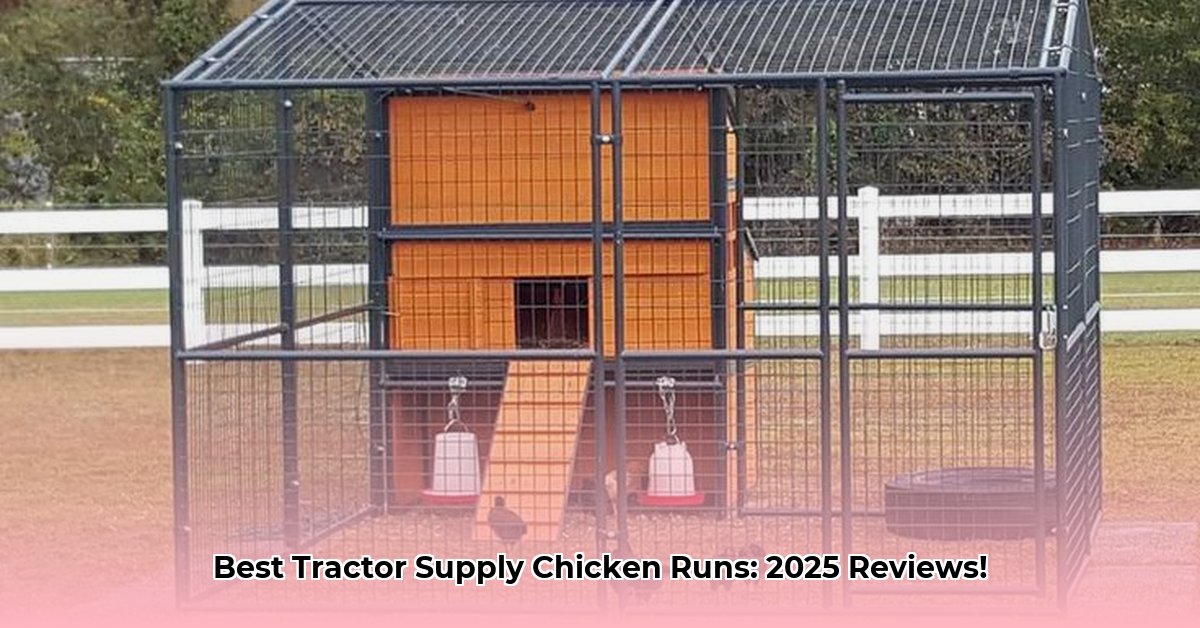
Thinking about welcoming feathered friends to your backyard? Fantastic! But choosing the right chicken run from Tractor Supply can feel overwhelming. This 2025 buyer's guide cuts through the confusion, helping you find the perfect enclosure for your flock, whether you're a seasoned chicken keeper or a first-timer. We'll cover everything from biosecurity and predator protection to choosing the right size and materials – all tailored to Tractor Supply's offerings. Let's get started! For additional resources on animal feed, check out Tractor Supply resources.
Planning Your Perfect Chicken Paradise: Essential Considerations
Before you even browse Tractor Supply's website, careful planning is key to ensuring your chickens' health and happiness. Think of it as designing the perfect vacation home for your feathery friends!
Disease Defense (Biosecurity)
Maintaining the health of your flock is paramount. A well-designed chicken run is your first line of defense against disease. Good ventilation is key to preventing the buildup of harmful bacteria and ammonia. Easy-to-clean materials are equally important for regular sanitation. What percentage of chicken diseases are linked to poor coop hygiene? Studies show a strong correlation between unsanitary conditions and outbreaks, highlighting the importance of choosing a run that's easy to maintain.
Material Matters: Choosing the Right Construction
Durability is vital. Your chicken run must withstand the elements – rain, sun, snow, and wind. Avoid cheap materials; they may lead to frequent repairs and costly replacements down the line. Consider galvanized steel for rust resistance, or welded wire mesh for superior cleaning and visibility. The debate continues about optimal material longevity, making careful research crucial.
Space & Scalability: Room to Grow
Chickens need adequate space. Overcrowding leads to stress, aggression, and health problems. A general guideline is 4 square feet per chicken, but this can change based on breed and climate. Are you planning on expanding your flock? Consider a modular design for easy expansion as your family grows. How much extra space should you plan for future growth? Experts recommend at least 20% additional space to accommodate potential expansions.
Predator Protection: Keeping the Foxes at Bay
Sadly, predators love chickens. A secure run is essential for keeping your flock safe. Look for runs with sturdy construction, strong mesh, secure latches, and potentially a buried base to help deter digging predators. Electric fencing is another option many consider. What is the most effective predator deterrent strategy? Combining several methods, such as strong mesh, a buried base, and possibly electric fencing, is often recommended for multiple layers of protection.
Climate Resilience: Weathering the Storm
Your climate dictates the type of run you need. In hot climates, prioritize shade and good ventilation. Cold climates demand good insulation and wind protection. The materials you choose significantly impact your coop's climate resilience. Choosing the right materials can mean the difference between a thriving flock and a stressed one.
Tractor Supply Chicken Run Showdown: A Comparative Review
Tractor Supply offers a range of chicken runs. This section provides a hypothetical comparison to illustrate the key features and trade-offs. Remember, actual availability, pricing, and specifications may vary.
| Feature | Run A: The Budget-Friendly | Run B: The Mid-Range Marvel | Run C: The Premium Fortress |
|---|---|---|---|
| Size | 8ft x 4ft | 10ft x 6ft | 12ft x 8ft |
| Material | Welded wire mesh | Galvanized wire mesh | Heavy-duty welded wire, wood frame |
| Predator Defense | Basic | Improved; with base | Enhanced; buried base, reinforced mesh |
| Assembly | Easy | Moderate | More complex |
| Price | $ | $$ | $$$ |
Run A: Best for small flocks on a budget. Con: Limited size and basic predator protection may require additional fencing.
Run B: Offers a good balance of size, features, and price. Con: Some customers may find the materials less durable than in premium models.
Run C: Provides maximum space and security, but has a higher cost and more complex assembly. Con: Requires more assembly time and skill.
Remember: Always check Tractor Supply's current offerings and read customer reviews before purchasing.
Assembling Your Chicken Run: A Step-by-Step Guide (Example: Run B)
This will vary by model. Always follow the manufacturer's instructions.
- Preparation: Read instructions fully. Gather tools. Choose a level location.
- Base Assembly: Assemble the base per instructions, securing connections firmly.
- Wall Installation: Attach wire mesh walls; ensure tight connections.
- Roof Construction: Assemble and securely attach the roof.
- Final Checks: Inspect all connections for stability.
Safety Note: Prioritize safety. Use proper tools and follow instructions carefully.
Maintaining Your Chicken Run: Ongoing Care
Regular maintenance is crucial:
- Cleaning: Clean weekly to prevent disease.
- Repairs: Address damage promptly to maintain structural integrity.
- Inspection: Regularly inspect for wear and tear; check latches and mesh.
Investing in a high-quality chicken run is an investment in your flock's happiness and health. This detailed guide empowers you to choose wisely, ensuring your chickens thrive for years to come.